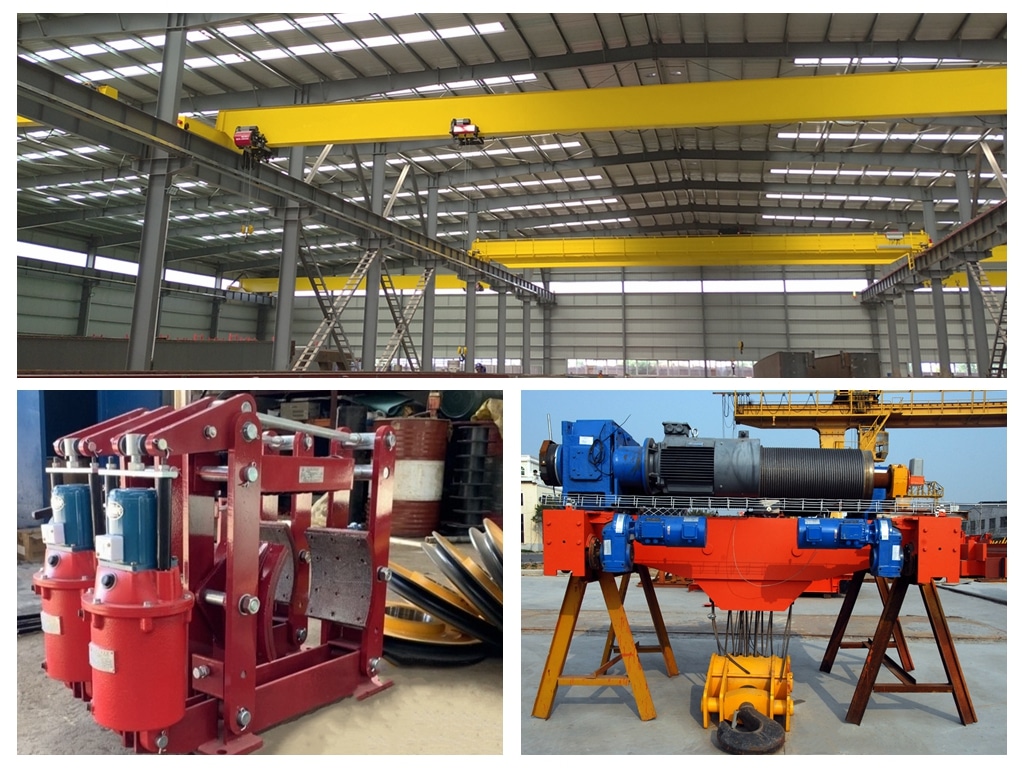
In industrial settings, safety and efficiency are two of the most critical factors that determine the success of operations. Whether in manufacturing plants, warehouses, or construction sites, heavy lifting tasks are a part of everyday operations. This is where bridge crane come into play, offering numerous benefits in both safety and operational efficiency. These overhead cranes are designed to lift and transport heavy materials, making them essential for various industries that rely on large, cumbersome loads.
In this article, we will explore how bridge cranes improve safety and efficiency in industrial operations, enhancing overall productivity and reducing risks in workplaces.
1. What is a Bridge Crane?
A bridge crane (also known as an overhead traveling crane) is a type of crane that operates on a set of rails mounted along the sides of a building or a freestanding structure. It consists of several key components: a bridge, hoist, trolley, and rails. The bridge spans the workspace, while the hoist, which is attached to a trolley, moves along the bridge to lift, transport, and place loads.
Bridge cranes can handle a wide range of materials, including large metal components, machinery, or heavy containers, which makes them invaluable in industries such as manufacturing, construction, and shipbuilding.
2. How Bridge Cranes Improve Safety
Safety is the foremost concern in any industrial operation, especially when it comes to handling heavy loads. Improper lifting or transporting of materials can lead to accidents, injuries, and even fatalities. Bridge cranes significantly improve safety by reducing the need for manual labor, preventing human error, and providing operators with better control over lifting tasks.
1. Reducing Human Error
Manual lifting and carrying of heavy materials pose significant risks to workers, including back injuries, strains, and accidents caused by dropped or improperly handled loads. bridge crane eliminate the need for manual handling, reducing the risk of human error. The crane’s hoist and trolley systems are precisely controlled, allowing operators to lift, move, and lower loads with accuracy. The ability to lift and transport materials without human intervention significantly decreases the risk of workplace accidents.
2. Minimizing Risk of Injury
Bridge cranes help reduce injuries associated with manual labor by performing tasks that would otherwise require workers to physically lift and move heavy items. These cranes enable workers to focus on operating machinery and overseeing operations, rather than performing the strenuous task of lifting and moving loads. This minimizes strain-related injuries, such as musculoskeletal disorders, which are common in industries that require physical labor.
3. Enhanced Operator Visibility
Bridge cranes are often operated from a centralized control booth, which provides operators with a clear view of the entire workspace. This improved visibility enables operators to monitor the positioning of the crane, the load, and the surrounding environment. Clear visibility reduces the chances of collisions or accidents and allows for more accurate load placement.
4. Safety Features
Bridge cranes are equipped with several safety features designed to prevent accidents and protect workers. Some of these safety features include:
-
Load limiters: These devices prevent the crane from lifting loads that exceed its capacity, ensuring that the crane operates within safe limits.
-
Emergency stop buttons: In case of an emergency, operators can immediately stop the crane’s movement to prevent further risk.
-
Anti-collision systems: Some modern bridge cranes are equipped with sensors that prevent collisions with objects or other cranes in the vicinity.
-
Overload protection: Overload protection mechanisms ensure that the crane does not attempt to lift a load beyond its safe lifting capacity.
5. Proper Load Handling
Bridge cranes are designed to handle specific load capacities, ensuring that heavy materials are moved safely and securely. The hoist system on a bridge crane is capable of distributing the load evenly, preventing it from swinging or shifting. This is particularly important when handling delicate or hazardous materials, as improper handling can lead to accidents, damage, or spills.
3. How Bridge Cranes Improve Efficiency
In addition to enhancing safety, bridge cranes also contribute to improved efficiency in industrial operations. Efficiency is key to meeting production deadlines, reducing operational costs, and maximizing output. Here’s how bridge cranes streamline operations and improve workplace productivity:
1. Faster Material Handling
One of the most significant advantages of using a bridge crane is its ability to move large loads quickly and efficiently. By automating the lifting and transporting of materials, bridge cranes reduce the time it takes to move materials from one location to another. This increased speed leads to faster workflows, which is essential in fast-paced industrial settings.
In environments where heavy materials need to be transported across long distances, such as large warehouses or construction sites, bridge cranes can cover large areas in a short amount of time, reducing delays and improving overall throughput.
2. Greater Precision in Load Placement
Bridge cranes provide operators with the ability to lift and place materials with high precision. This is particularly important when placing loads in tight spaces or when working with sensitive materials that require careful handling. The precision of bridge cranes reduces the risk of errors and ensures that materials are placed exactly where they are needed. This eliminates the need for manual adjustments, which can be time-consuming and prone to error.
3. Optimal Use of Space
Because bridge cranes are mounted on tracks or rails positioned above the workspace, they do not occupy valuable floor space. This allows operators to maximize the available floor area for other tasks or equipment. In facilities where space is limited, such as warehouses or factories with high storage needs, bridge cranes are an ideal solution for moving materials without taking up valuable real estate.
By operating overhead, bridge cranes help clear up the floor space for other activities such as assembly, storage, or packaging, thus improving the facility’s overall productivity.
4. Reducing Downtime
Downtime in industrial operations can be costly, leading to missed deadlines, reduced productivity, and lost profits. Bridge cranes are designed for durability and reliability, minimizing the risk of mechanical failure and downtime. Additionally, many bridge cranes feature advanced monitoring systems that alert operators to potential issues before they result in breakdowns. This proactive approach to maintenance ensures that the crane continues to operate efficiently, reducing costly disruptions to operations.
5. Flexibility and Versatility
Bridge cranes are highly versatile and can be used in a variety of industrial settings. They can be customized to handle different load capacities, lifting heights, and operational requirements. Whether lifting large machinery in a factory or moving raw materials in a construction site, bridge cranes are adaptable to a wide range of tasks. Their flexibility makes them valuable assets in diverse industries, improving efficiency across various processes.
6. Reducing Labor Costs
By automating the process of lifting and moving heavy materials, bridge cranes reduce the need for manual labor. This reduces the reliance on human workers for physically demanding tasks, which can lead to labor shortages, higher wages, or increased injury claims. With bridge cranes, workers can focus on more specialized tasks, allowing for more efficient use of labor and lower overall labor costs.
4. Conclusion
Bridge cranes are essential tools that greatly improve safety and efficiency in industrial operations. By reducing the risk of manual lifting, minimizing injuries, and improving control over heavy materials, bridge cranes create safer work environments for employees. In addition to safety benefits, bridge cranes contribute to operational efficiency by speeding up material handling, optimizing space usage, and improving precision.
The integration of bridge cranes into industrial operations not only enhances worker safety but also helps businesses achieve higher levels of productivity, reduced downtime, and cost savings. For industries that rely on heavy lifting, investing in bridge cranes is a crucial step toward achieving operational excellence and ensuring long-term success.