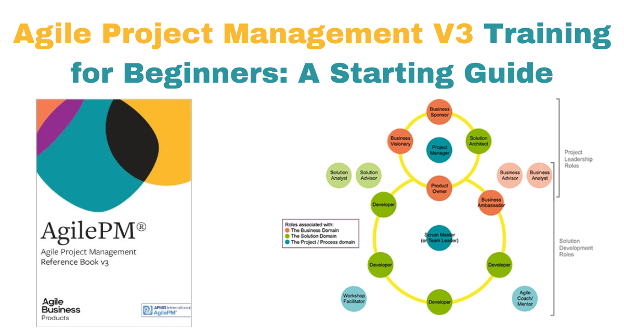
Agile Project Management has become an essential tool in today’s rapidly changing business world, enabling teams to adjust to new project requirements with ease. For those just starting out, the Agile Project Management V3 Training is a perfect entry point. This course introduces beginners to the fundamental elements of Agile, such as iterative planning, effective teamwork, and continuous improvement, providing a clear understanding of how to implement these concepts in real-world scenarios.
Through the Agile Project Management V3 Training, participants will gain practical skills needed to navigate and succeed in fast-paced project environments. The program incorporates hands-on examples and exercises, helping learners confidently apply Agile techniques, which ultimately enhances their ability to deliver successful project outcomes while preparing them for future career growth in project management.
What Is Agile Project Management V3?
Agile Project Management V3 (AgilePM3) is a comprehensive framework that integrates traditional project management principles with the flexibility of agile methodologies. Created by the Agile Business Consortium, this approach provides structure while allowing teams to remain adaptable to changing project requirements. AgilePM3 focuses on collaboration, iterative progress, and continuous enhancement, making it applicable across various industries beyond just IT and software development.
For professionals looking to master this framework, AgilePM3 training is crucial. It offers insights into how to efficiently manage projects in fast-paced environments, balancing key factors such as time, budget, and scope. The AgilePM3 process lifecycle, which spans from initial planning to final delivery, ensures that each phase of a project brings tangible value. Incorporating well-established agile practices like MoSCoW prioritization, timeboxing, and Scrum roles, AgilePM3 helps teams navigate complex projects while maintaining focus on business objectives. With its proven track record, AgilePM3 has gained recognition globally, with over 200,000 certified professionals applying its principles to enhance project outcomes.
What Are the Core Principles of Agile V3?
The core principles of Agile Project Management V3 (AgilePM3) are essential for ensuring effective project delivery while maintaining the flexibility inherent in Agile methods. These principles are at the heart of the AgilePM3 framework, guiding its philosophy. Here’s a breakdown of the eight core principles:
1. Focus on Business Needs:
Every decision in AgilePM3 is centered around delivering value to the business. The framework ensures that projects continuously align with business objectives, maximizing relevance and impact.
2. Collaborate:
Collaboration is key in AgilePM3, encouraging active engagement from all stakeholders throughout the project. This teamwork fosters better communication, understanding, and decision-making, essential aspects taught in an AgilePM3 course.
3. Build Incrementally from Firm Foundations:
AgilePM3 emphasizes delivering projects in stages, with each increment allowing for feedback and improvement. This iterative process ensures that the final product is more aligned with business needs, making projects adaptable and flexible.
4. Communicate Continuously and Clearly:
Clear and open communication is fundamental in AgilePM3. Stakeholders are encouraged to engage regularly, ensuring everyone remains aligned with the project’s goals, an essential skill emphasized in an AgilePM3 course.
5. Deliver on Time:
Time is a fixed variable in AgilePM3. The framework advocates sticking to predetermined timelines, ensuring consistent progress and timely delivery of project components.
6. Never Compromise Quality:
Quality is non-negotiable in AgilePM3. The framework ensures that all deliverables meet the highest standards, aligning with business requirements without cutting corners.
7. Develop Iteratively:
AgilePM3 encourages continuous development and improvement. Each cycle of iteration allows teams to adapt and refine the project based on growing understanding and feedback.
8. Demonstrate Control:
Maintaining control and visibility is critical in AgilePM3. Regular reviews and feedback loops ensure the project stays on track, aligning with business objectives throughout its lifecycle.
How To Learn Effective Agile Project Management V3?
To learn effective Agile Project Management V3 (AgilePM3), it’s essential to understand its principles, processes, and how it differs from traditional project management approaches. AgilePM3 is designed to provide a balanced framework that combines the structure and rigor of project management with the flexibility and adaptability of Agile methodologies.
One of the best ways to gain expertise in AgilePM3 is through comprehensive training programs. Tecknologia is an outstanding online platform that offers top-notch Agile Project Management V3 training. With expert instructors guiding you, you can adapt the best AgilePM3 course from the comfort of your home. Their courses are tailored to provide in-depth knowledge and practical skills essential for successfully implementing Agile principles in various project environments.
In addition to AgilePM3 training, Tecknologia provides a wide range of online courses, catering to different learning needs and professional development goals. By enrolling in Tecknologia’s AgilePM3 training, you will not only enhance your project management skills but also gain valuable insights into Agile methodologies that can significantly improve your project outcomes.
What are the Benefits of Agile Project Management V3?
Agile Project Management V3 (AgilePM3) presents a range of advantages that make it an appealing approach for managing projects across various sectors. By enrolling in Agile Project Management V3 Training, teams can effectively harness these benefits. Here are some of the primary advantages of adopting AgilePM3:
1. Increased Adaptability:
AgilePM3 focuses on flexibility, enabling teams to quickly adjust to shifting project requirements or changing market conditions. This adaptability allows projects to evolve based on immediate feedback and insights, resulting in solutions that align closely with client expectations.
2. Enhanced Collaboration:
This framework promotes ongoing engagement with stakeholders, including clients and team members, fostering a collaborative atmosphere. Such involvement not only boosts transparency but also elevates stakeholder satisfaction, as their feedback is integrated throughout the project journey.
3. Quicker Delivery:
AgilePM3 supports the timely and frequent delivery of project increments, helping organizations gain early benefits. By concentrating on the most critical features, teams can launch products faster and adapt efficiently to market demands.
4. Effective Quality and Risk Management:
The AgilePM3 framework includes inherent quality assurance and risk management practices, ensuring that deliverables align with business objectives. With high-level acceptance criteria established at various stages, teams can proactively address risks throughout the project lifecycle.
5. Clear Structure and Roles:
AgilePM3 offers a well-defined framework that clarifies roles and responsibilities, reducing confusion and fostering accountability among team members. This clarity streamlines collaboration and enhances overall project delivery.
6. Emphasis on Business Value:
By aligning projects with specific business goals, AgilePM3 ensures that the work being done directly contributes to the organization’s objectives. This focus enables organizations to implement changes more rapidly and effectively, optimizing return on investment.
7. Scalability and Versatility:
AgilePM3 is designed to be scalable, making it applicable to projects of varying sizes and complexities across multiple industries. Its adaptability allows organizations to implement agile practices successfully, regardless of their operational context.
8. Commitment to Continuous Improvement:
The framework encourages iterative development, promoting regular reflection on processes and outcomes. This practice cultivates a culture of continuous improvement, enabling teams to learn from each project and enhance their performance over time.
Conclusion:
In conclusion, Agile Project Management V3 Training provides a robust foundation for beginners looking to thrive in the dynamic landscape of project management. By equipping participants with the fundamental principles and practical skills of Agile methodologies, this training not only enhances project delivery but also fosters a culture of collaboration and continuous improvement. As organizations increasingly seek flexible and responsive project management strategies, understanding and implementing AgilePM3 becomes essential for both personal and professional growth.
By choosing to engage with resources like Tecknologia’s Agile Project Management V3 Training, individuals position themselves to navigate the complexities of modern project environments successfully. The commitment to learning and adapting Agile principles will empower them to meet evolving business needs, improve stakeholder satisfaction, and ultimately contribute to delivering projects that create real value. In a world where change is the only constant, the knowledge gained through Agile Project Management V3 Training is not just an asset; it is a vital tool for achieving lasting success in any project-driven initiative.