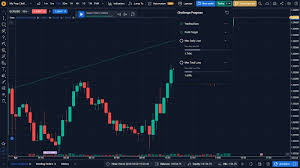
Although futures markets are deep, quick, and full of opportunities, there is a risk involved. Prop firms are more aware of this than anybody else which is why they don’t simply provide money to anyone claiming to be able to trade. Rather, they assess your trading approach as if it were a hawk.
However, how do they really do that? What do they want to find? And how can you ensure that your trading strategy for futures meets all the requirements? Let’s talk in more detail.
What Prop Firms Really Want
A prop company is ultimately a business. They are looking for traders that can generate steady earnings without declining the account. One unfavorable trade that triples your balance overnight doesn’t excite them. Consistency, discipline, and risk management are what they want.
These characteristics become much more crucial when it comes to futures trading for beginners where leverage has the ability to quickly magnify earnings and losses. An unrestrained trading technique for futures? It won’t work.
Track Record:
The first thing a futures trading prop firm will want to see is your trading history. If you’re applying to a firm that provides a challenge or evaluation phase then this part happens in real-time. They want to see how you perform under pressure on a live or simulated account.
Here are a few key metrics they’ll focus on:
- Win rate: How often do your trades end in profit?
- Risk-to-reward ratio: Are you making more on winners than you’re losing on losers?
- Drawdown: What’s the biggest drop from your peak balance? Firms get nervous when this gets too high.
- Consistency: Are your results steady or all over the place?
Don’t worry if you don’t have a perfect track record. No one does. But you do need to show that your strategy can hold up over time.
Risk Management:
If your strategy doesn’t have solid risk management then it’s basically dead on arrival. Prop firms don’t want cowboys. They want calculated risk-takers who protect their downside.
Things prop firms love to see:
- Stop losses on every trade
- Position sizing based on account balance
- Maximum daily loss limits
- Clear rules for when to step away after a losing streak
Strategy Logic: Does It Make Sense?
This is where things get a little more nuanced. Prop firms want to know why your strategy works. What’s the logic behind it? Are you exploiting a repeatable edge or are you just winging it based on what feels right?
Here are a few questions your strategy should answer:
- What market conditions does it perform best in?
- What time of day do you usually trade?
- How do you identify entries and exits?
- Is it based on technical analysis, fundamental factors, or both?
If you can’t explain your strategy in a clear and concise way then that’s dangerous. A prop firm won’t expect you to write a PhD dissertation but they will want to see that you’ve put real thought into your approach.
Adaptability: Can Your Strategy Handle Change?
Markets change. What worked like a charm last quarter might fall flat today. Prop firms know this so they’re keen to find out if your strategy can evolve.
Some signs of adaptability they look for:
- You review and refine your strategy regularly
- You’ve tested it across different market environments
- You’re not afraid to cut something that no longer works
- You can switch gears if volatility spikes or liquidity dries up
Nobody wants to fund a trader who freezes up when things stop going their way. If you can show that your futures strategy has some flexibility baked in then you’ll win major points.
Risk-Adjusted Performance: Are You Getting Paid for the Risk You Take?
It’s not just about how much you make but it’s about how you make it. Prop firms look closely at your risk-adjusted returns to figure out if you’re making smart bets or just getting lucky.
Metrics that come into play here:
- Sharpe ratio: Measures return relative to risk
- Profit factor: Total profit divided by total loss
- Sortino ratio: Like the Sharpe, but only penalizes downside volatility
If you’re risking $500 to make $100, even if you win a lot, that’s not sustainable. Prop firms want strategies that make more than they risk over time.
Execution: Can You Actually Follow Your Plan?
It’s one thing to have a strategy but another to execute it. Prop firms are watching to see if you stick to your plan or crumble when the heat’s on.
Do you:
- Hesitate to pull the trigger?
- Deviate from your rules after a loss?
- Chase trades you shouldn’t be in?
- Overtrade when bored?
If any of these sound familiar, you’re not alone. But these habits can sink even the best strategies. Prop firms will often use a trial period or evaluation phase to test this very thing.
Pro tip: Keep a journal. Seriously. Logging your trades and reviewing them helps you stay accountable and sharpens your edge.