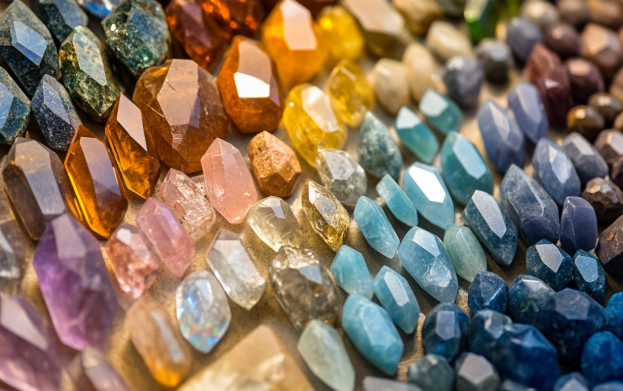
Gemstones have fascinated people for centuries, coveted for their beauty, rarity, and the enduring allure they bring to jewelry, art, and collectibles. But have you ever wondered how these precious stones make their way from deep inside the Earth to the market? The journey from gemstone mine to marketplace is long and complex, involving various stages, each crucial to bringing the gem to life. This article will take you inside a gemstone mine to explore the entire journey—from discovery to market.
1. The Origins: Finding Gemstones in the Earth
The journey of every gemstone begins far beneath the Earth’s surface, where natural processes like heat, pressure, and time transform ordinary minerals into precious stones. Gemstones are typically found in areas with active geological activity, including regions with volcanic eruptions, plate tectonics, and sedimentary deposits.
a. Geological Formation
Gemstones are formed through a variety of geological processes that take millions of years. Most gemstones form in metamorphic rocks under high pressure and temperature conditions. Others, such as diamonds, form deep within the Earth’s mantle and are brought to the surface through volcanic eruptions.
In addition to formation in deep earth layers, gemstones like sapphires, rubies, and emeralds are also found in alluvial deposits—streams and rivers that have carried them down from their original source in mountains or volcanic regions. The environment in which these gemstones form influences their color, clarity, and overall appearance.
b. Exploration and Prospecting
The first step in mining gemstones is locating them. Gemstone prospecting involves research, mapping geological formations, and sometimes even trial digging to determine where valuable gemstones are likely to be. Exploration often requires experts such as geologists, geochemists, and surveyors to identify promising areas.
Modern exploration methods may use satellite imaging, geological surveys, and even ground-penetrating radar to locate mineral-rich areas. Once potential mining sites are identified, mining operations are set up to extract the stones.
2. Mining: The Process of Extraction
Once gemstones are located, the next step is extraction, which can be done in a variety of ways depending on the depth of the deposit and the type of gemstone being mined.
a. Open-Pit Mining
For shallow deposits, open-pit mining is the most common method. This involves removing large amounts of earth and rock to reach the gemstones underneath. Excavators, trucks, and loaders are used to move materials, and the stones are separated from the surrounding rock. Open-pit mining is efficient for extracting larger quantities of gemstones, but it can have a significant environmental impact due to the amount of land disturbed.
b. Underground Mining
When gemstones are found deeper in the earth, underground mining becomes necessary. Miners dig tunnels or shafts into the earth to access gemstone-rich layers. This process is more labor-intensive and expensive than open-pit mining, but it is necessary for valuable stones that are located deeper underground.
Underground mining requires specialized equipment such as drills, blasting materials, and heavy-duty machinery to safely extract the gems. Safety is a top concern, and miners are trained to navigate the challenges that come with working in confined spaces and dealing with unstable rock formations.
c. Alluvial Mining
Alluvial mining is a form of surface mining that involves extracting gemstones from riverbeds, streams, or other places where gems have been carried by water over time. This method is often used for gemstones like sapphires, garnets, and diamonds that are found in river deposits. Alluvial mining involves separating the stones from the surrounding gravel or sand using a combination of washing, sifting, and sometimes mechanical sieves.
3. Sorting and Processing: Preparing Gemstones for the Market
Once gemstones are extracted, they go through an essential sorting and processing phase to prepare them for sale and transport.
a. Initial Sorting
After extraction, gemstones are initially sorted based on their size, type, and appearance. This process often takes place on-site at the mine or in nearby processing plants. Sorting involves separating gemstones by their color, clarity, and overall quality, as these factors will impact their value in the market.
Some mines also employ gemologists or specialized workers who use magnifying tools to assess the quality of each gemstone. Stones that are rough or imperfect may be set aside for further processing or discarded, depending on their marketability.
b. Cutting and Polishing
Gemstones are rarely sold in their raw, unpolished state. The next step in the journey is cutting and polishing, which transforms rough gemstones into brilliant, faceted jewels. This is a critical part of the gemstone’s lifecycle, as the way a gem is cut can greatly impact its final appearance and value.
Skilled artisans use diamond-tipped tools to carefully cut gemstones into specific shapes that enhance their natural brilliance. The process requires expertise in both craftsmanship and an understanding of the gem’s internal structure. Some gemstones, like diamonds, are cut in specific patterns, while others may be polished to highlight their color or transparency.
c. Grading and Certification
After cutting, the gemstones are graded based on the “Four Cs”: cut, color, clarity, and carat weight. This grading system is crucial in determining the value of a gemstone and helps buyers make informed decisions about the gems they are purchasing.
Gemstones, especially high-value stones like diamonds and emeralds, may be sent to certified laboratories for official grading and certification. Certification from respected gemological institutes such as the Gemological Institute of America (GIA) or the American Gem Society (AGS) assures buyers that the gemstones they are purchasing meet specific quality standards.
4. Distribution: From Mines to Markets
After sorting, cutting, and certification, gemstones are ready to be distributed. This step involves moving the gems from mines or processing centers to the wholesale market, jewelry manufacturers, or retailers.
a. Wholesale Distribution
Gemstones are typically sold in bulk to wholesalers, who purchase them directly from the mines or processing facilities. Wholesale distributors act as intermediaries between the mining operations and retailers or jewelers. This process allows gemstone producers to reach a broader market, and it gives retailers access to a wide variety of gemstones without having to deal with individual suppliers directly.
Wholesalers may also provide additional services like packaging, sorting, and grading, and may offer certification for high-value gemstones to reassure customers about their authenticity.
b. Jewelry Manufacturers and Retailers
Once gemstones are in the hands of wholesalers, they are then purchased by jewelry manufacturers and retailers. Jewelry designers often source gemstones directly from wholesalers to create one-of-a-kind pieces, while retailers use the gemstones to stock their store shelves or sell them online.
Gemstones can be set into rings, necklaces, bracelets, or earrings, and their value may increase significantly once they are incorporated into jewelry pieces. Retailers also focus on marketing gemstones to customers by emphasizing their unique characteristics, the stories behind their origin, and their beauty.
5. The Final Step: From Market to Consumer
The final step in a gemstone’s journey is its sale to the consumer. Whether through a jewelry store, an online marketplace, or a direct transaction at a gem show, the gem is now ready for the end user.
Consumers purchase gemstones for a variety of reasons, whether as precious jewelry, collectibles, or for their alleged metaphysical properties. As gemstones grow in popularity and consumer demand increases, more businesses are turning to ethical sourcing practices, ensuring that the gemstones are mined sustainably and without harm to local communities.
Conclusion
The journey of a gemstone from its discovery deep within the Earth to its final sale in the marketplace is a fascinating process that involves numerous stages, each adding value to the gem. From geological formation and mining to cutting, certification, and distribution, each step plays a critical role in ensuring that the gemstone reaches the consumer in its most beautiful and valuable form. By understanding the complexities of this journey, consumers and businesses alike can better appreciate the time, effort, and expertise involved in bringing gemstones to market. Whether you’re a jewelry maker, retailer, or collector, knowing the path gemstones take can deepen your connection to these remarkable treasures.