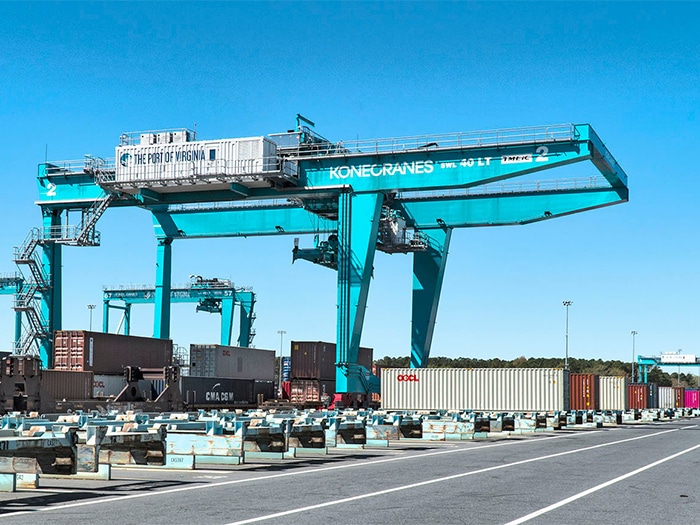
gantry crane are an integral part of heavy-duty lifting operations across various industries. Their ability to lift, transport, and position large and heavy loads makes them indispensable in sectors such as construction, manufacturing, shipbuilding, and more. These versatile machines offer the flexibility of being able to move across spaces while performing complex lifting tasks, which is crucial for projects that require precision, power, and efficiency.
In this blog, we’ll explore how gantry cranes are used in heavy-duty lifting applications, highlighting their benefits, capabilities, and the industries that rely on them for handling large-scale tasks. We will also delve into the factors to consider when selecting the right gantry crane for specific needs and the future of gantry crane technology.
What Is a Gantry Crane?
A gantry crane is a type of crane used for lifting and moving heavy loads across an industrial environment. What makes gantry cranes unique is their mobility. The crane consists of a bridge that spans across two or more legs (sometimes on tracks or wheels) that allow it to move freely within a workspace. This design enables gantry cranes to be easily repositioned, making them ideal for environments where lifting needs vary in terms of location.
There are different types of gantry cranes, including:
-
Single Girder Gantry Cranes: Used for lighter loads, they feature a single overhead beam.
-
Double Girder Gantry Cranes: These cranes are equipped with two parallel beams, offering more strength and versatility for handling heavier loads.
-
Full Gantry Cranes: These cranes are large and cover an entire work area, often used for heavy-duty operations.
-
Portable gantry crane: Smaller and often adjustable, these cranes are designed for flexibility in lighter applications.
The unique design of gantry cranes makes them suitable for industries that involve heavy lifting over large distances or require lifting loads in outdoor or open-air environments, such as construction sites and shipyards.
Key Applications of Gantry Cranes in Heavy-Duty Lifting
Gantry cranes are essential in industries where the handling of large, heavy loads is a common occurrence. Let’s explore some of the key industries and tasks where gantry cranes excel.
1. Construction: Lifting Heavy Building Materials
Construction sites are one of the most common locations for gantry cranes. These cranes are used to lift and position heavy materials such as steel beams, concrete slabs, and prefabricated structures. The ability to move these materials with ease and precision is vital in maintaining a steady construction pace and avoiding delays.
-
Handling Large Materials: Steel beams, concrete panels, and other construction materials need to be moved and placed accurately. Gantry cranes offer precise control over large, unwieldy materials that require heavy lifting.
-
Flexibility on Site: Construction sites often face space constraints and changing layouts. Gantry cranes can be moved along tracks or wheels, allowing them to cover different areas of the site as needed. This flexibility ensures that heavy loads can be moved to any point on the site, regardless of the layout.
2. Shipbuilding and Marine Industry: Maneuvering Large Ship Sections
In shipyards, gantry cranes are critical for lifting and moving massive ship sections, engines, and other equipment. The construction of ships involves handling massive steel panels, components, and even entire ship hulls, all of which require powerful lifting systems.
-
Lifting Ship Sections: Gantry cranes are used to move large sections of ships, such as hulls, decks, and even entire modules. These components are often too large and heavy for smaller cranes, making gantry cranes the go-to solution for lifting and positioning them accurately.
-
Ship Repairs and Maintenance: Gantry cranes are also used in the repair and maintenance of ships. They can lift heavy machinery or engine parts to and from various positions on the ship, providing the necessary flexibility for maintenance work.
3. Manufacturing: Precision Lifting of Heavy Components
The manufacturing sector, especially those involved in heavy equipment, automotive, aerospace, and steel production, frequently utilizes gantry cranes to move heavy components throughout the production line. Whether it’s lifting automotive parts or assembling large machinery, gantry cranes ensure that the production process runs smoothly.
-
Assembly Line Operations: In industries like automotive manufacturing, gantry cranes help in assembling heavy components, such as engines, transmissions, and body frames, with precision. They are used to lift and position these components on assembly lines or to move finished products to shipping areas.
-
Steel Industry: Gantry cranes are frequently used in steel plants to handle large steel billets, slabs, and other materials that are too heavy to be moved manually or by smaller lifting equipment.
4. Logistics and Warehousing: Handling Heavy Cargo
In logistics and warehousing, gantry cranes are often used to move large cargo or materials, especially in container terminals or large distribution centers. Their ability to carry heavy and bulky materials makes them an ideal tool in this sector.
-
Loading and Unloading Ships: In ports and harbors, gantry cranes are used to load and unload containers from ships. These cranes are equipped to handle large containers and cargo, ensuring that loading and unloading are done quickly and safely.
-
Transportation of Bulk Materials: In warehouse environments, gantry cranes are utilized to move bulk materials and large items from one storage area to another, reducing manual labor and optimizing storage space.
5. Energy and Mining: Moving Heavy Equipment and Materials
The energy and mining industries rely on gantry cranes to move heavy equipment, such as generators, turbines, and mining machinery, that need to be lifted and positioned for maintenance, installation, or relocation.
-
Mining Equipment Handling: In mining operations, gantry cranes are used to transport large mining machinery or heavy raw materials, such as ores and minerals. These operations often take place in tough environments, where lifting equipment needs to be robust and adaptable to various conditions.
-
Energy Sector: In power plants, gantry cranes are used to lift and transport large components like turbines, boilers, and generators during both the construction and maintenance phases of power plant operations.
Factors to Consider When Selecting a Gantry Crane
Selecting the right gantry crane for a particular heavy-duty lifting application requires careful consideration of several factors to ensure that the crane meets the requirements of the project. Some key factors include:
-
Load Capacity: The crane must be able to safely handle the maximum weight of the materials it will lift. Gantry cranes come in a variety of load capacities, so it’s essential to choose one that can support the heaviest loads in the intended application.
-
Span and Height: The span refers to the distance the crane’s bridge can cover, while height refers to how far the crane can lift loads. These factors depend on the size of the work area and the types of materials that need to be moved.
-
Mobility: Some gantry cranes are portable or mounted on wheels, which provides flexibility in moving the crane around the site. In contrast, fixed gantry cranes that move on tracks are better suited for specific, large-scale operations.
-
Safety Features: When lifting heavy loads, safety is paramount. Modern gantry cranes come with a range of safety features, including overload protection, automatic shutoffs, and advanced control systems that ensure safe operation.
-
Environment: The crane’s design should be suited to the environment in which it will operate. For example, outdoor gantry cranes need to be built to withstand weather conditions, while cranes in high-temperature environments must be constructed with heat-resistant materials.
The Future of Gantry Crane Technology
The evolution of gantry cranes continues to shape industries that require heavy-duty lifting. Advances in technology are making gantry cranes more efficient, safer, and easier to operate. Features such as automated control systems, remote operation, and AI-based load monitoring are becoming standard in modern gantry cranes.
The development of smart gantry cranes will likely play a pivotal role in improving operational efficiency, reducing human error, and enhancing safety in the future. Additionally, advancements in materials and structural designs will allow gantry cranes to lift even heavier loads while maintaining higher stability.
Conclusion
Gantry cranes are the workhorses of many heavy-duty lifting applications, providing industries with a reliable, safe, and efficient solution for moving large and heavy loads. From construction and shipbuilding to manufacturing, energy, and logistics, gantry cranes offer the flexibility, precision, and lifting power necessary to support complex industrial operations. As technology continues to advance, we can expect even more innovative features that will improve the capabilities and functionality of these essential lifting machines, further solidifying their role as indispensable tools in heavy-duty industries.